
Common types of braking resistors:
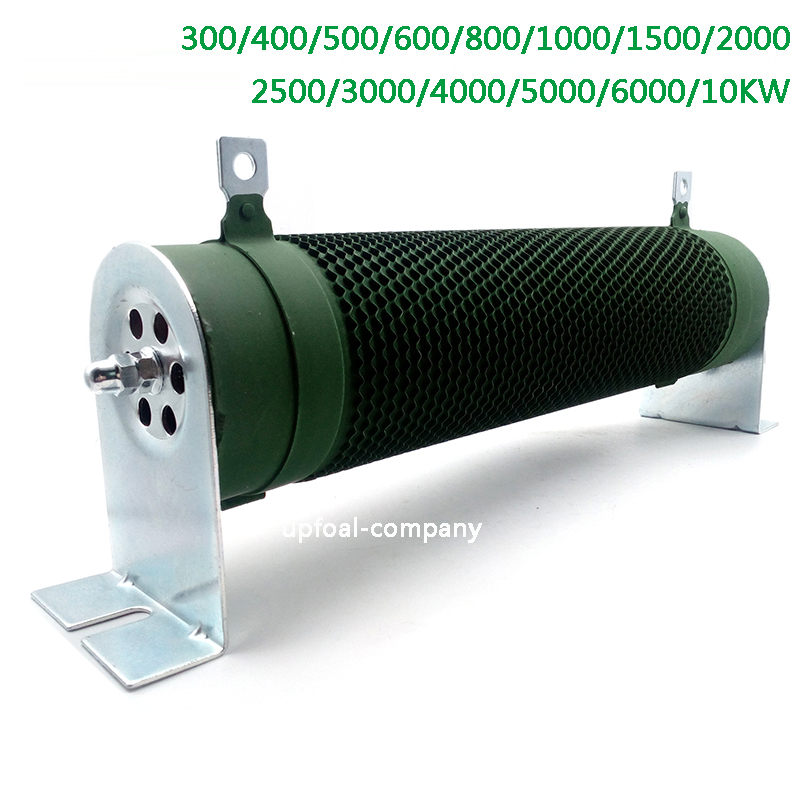
1.Winding resistance (ripple resistance) The winding ripple resistance adopts the surface vertical ripple winding mode, which is beneficial to heat dissipation and reduces parasitic inductance. The surface uses a high flame retardant inorganic coating, which effectively protects the resistance wire from aging and prolongs the service life.
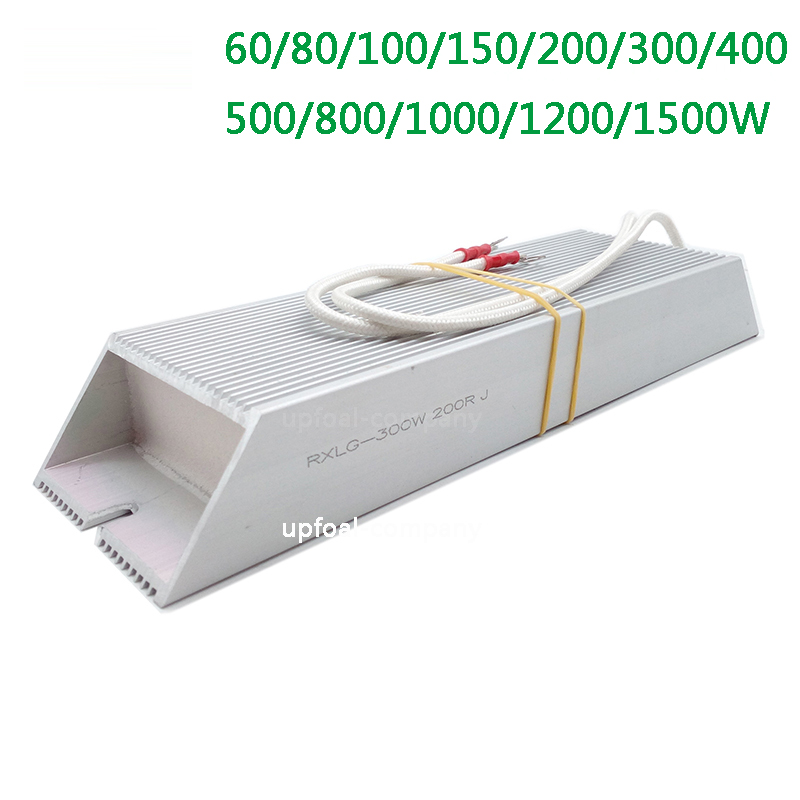
2.aluminum shell resistor aluminum alloy resistor is easy to install tightly, easy to attach radiator, beautiful appearance, using high heat dissipation aluminum alloy outer box fully encapsulated structure, with strong vibration resistance, weather resistance and long-term stability; It has the advantages of small volume, high power, convenient and stable installation, strong insulation ability and beautiful appearance, and is widely used in various industrial environments.
3.Brake resistor box The brake resistor box is a way of integrating multiple winding ripple resistors or multiple aluminum shell resistors into a box, which has the characteristics of high power, convenient installation and better insulation performance compared with winding resistors.
Selection of braking resistor:
Braking resistor is a carrier used to consume the regenerative energy of inverter in the form of heat energy, which includes two important parameters: resistance value and power capacity.
Besides being limited by the maximum allowable current, the braking resistor has no clear correspondence with the braking unit, and its resistance value is mainly selected according to the required braking torque, and the power is determined according to the resistance value and utilization rate of the resistor.
There is an inviolable principle in selecting the resistance value of the braking resistor: the current IC flowing through the braking resistor should be guaranteed to be less than the maximum allowable current output capacity of the braking unit, namely:
R > 800/Ic
Where: 800 —— the maximum DC voltage that may appear on the DC line of the frequency converter.
Ic —— Maximum allowable current of braking unit.
Selection method of braking resistor resistance:
In order to make full use of the capacity of the special braking unit for frequency converter, it is usually reasonable to select the resistance value of braking resistor close to the minimum value calculated above, and at the same time, the maximum braking torque can be obtained, but this requires a large braking resistor power. The purchase cost of braking resistor with higher power will be relatively higher.
Therefore, in some cases, a large braking torque is not needed. At this time, it is more economical to choose a larger braking resistor value, so that the power of the braking resistor can be reduced, thus reducing the cost of purchasing the braking resistor. However, the cost is that the capacity of the braking unit is not fully utilized and the relative stability will be reduced.
Selection method of resistance power:
After selecting the resistance value of braking resistor, the power value of braking resistor should be determined. The selection of braking resistor power is relatively complicated, which is related to many factors.
The instantaneous power consumed by the braking resistor is calculated as follows:
P instantaneous = 7002 /R
The power value of the braking resistor calculated according to the above formula is the power value that can be dissipated when the braking resistor can work continuously for a long time. However, the braking resistor does not work continuously, which is a great waste. In this product, the utilization rate of the braking resistor can be selected, which specifies the short-term working ratio of the braking resistor. The actual power consumed by the braking resistor is calculated according to the following formula:
P amount =7002 /R×rB% rB%: braking resistance utilization rate.
In actual use, the power of the braking resistor can be selected according to the above formula, or the utilization rate that the braking resistor can bear can be calculated in turn according to the selected resistance and power of the braking resistor, so that the braking resistor can be set correctly to avoid overheating and damage.
service power
The utilization rate of the braking resistor determines the utilization efficiency of the braking resistor, so as to avoid the braking resistor from overheating and damage, which will affect the braking effect of the braking unit.
The lower the utilization rate of the braking resistor, the longer the cooling period of the resistor, the smaller the degree of heating, the less energy consumed by the resistor, and the power selection of the braking resistor can be relatively small.
On the contrary, the higher the utilization rate of the braking resistor (fast frequency and short cooling period), the greater the degree of heating, and the greater the energy consumed by the resistor. In this case, the power selection of the braking resistor needs to be relatively large.
To put it simply: the smaller the resistance value of the braking resistor, the better the braking effect and the better the protection for the control system. However, the power of the braking resistor should also be larger, and the higher the purchase cost.
The opposite is also true.
Realistic choice method:
According to the braking resistance selection guide of frequency converter, the corresponding resistance value is selected according to the reference book according to the model, and the power is selected to increase or decrease the power in the working condition with frequent braking, and the power is selected to reduce the cost in the working condition with low braking frequency. However, if the braking frequency is high, the power selection should be increased.